Three Doors
A witness testimony delivered at Gibraltar’s shop — Burnet, Texas
April 8, 2026 · Matt Kelly
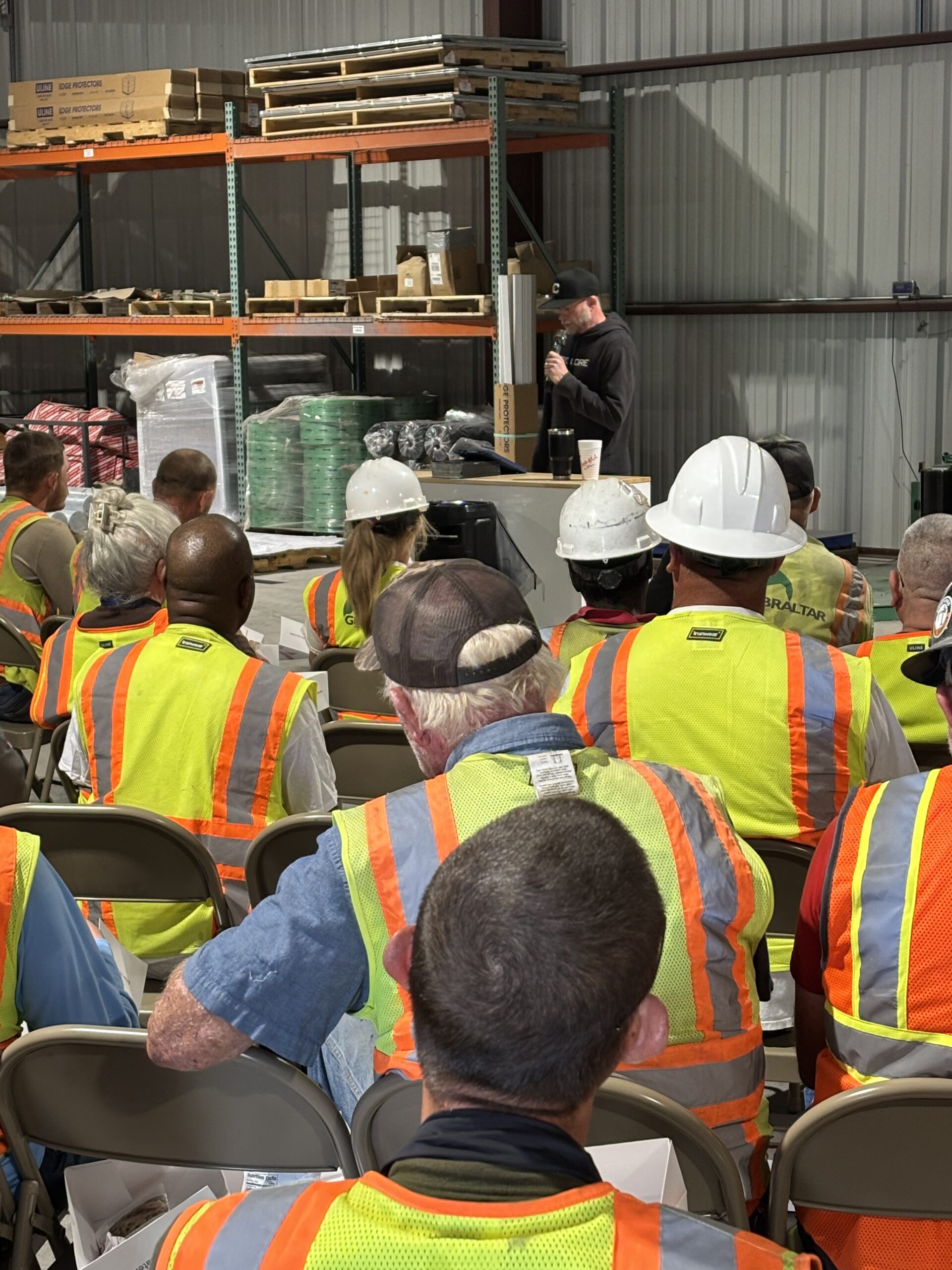
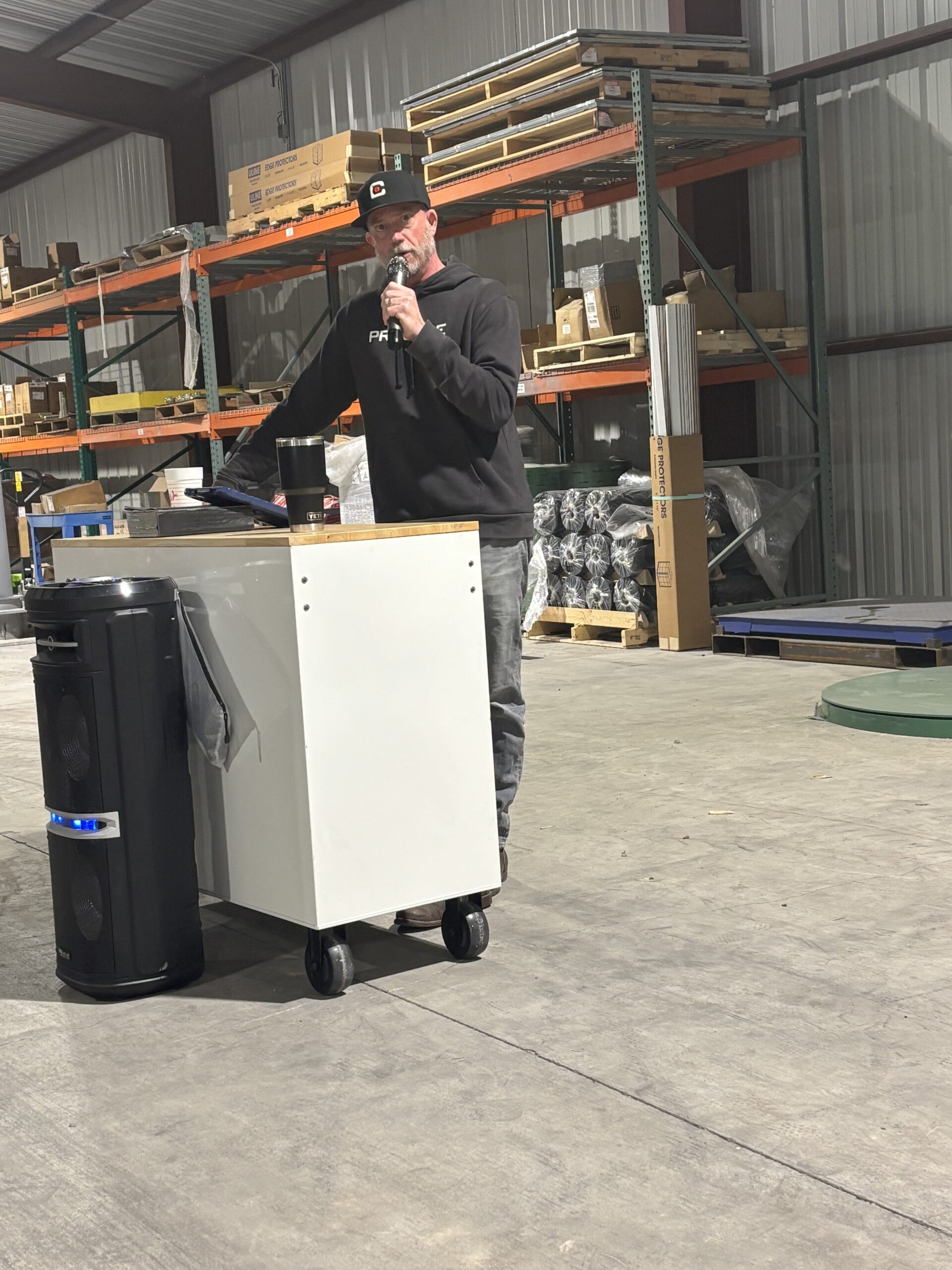
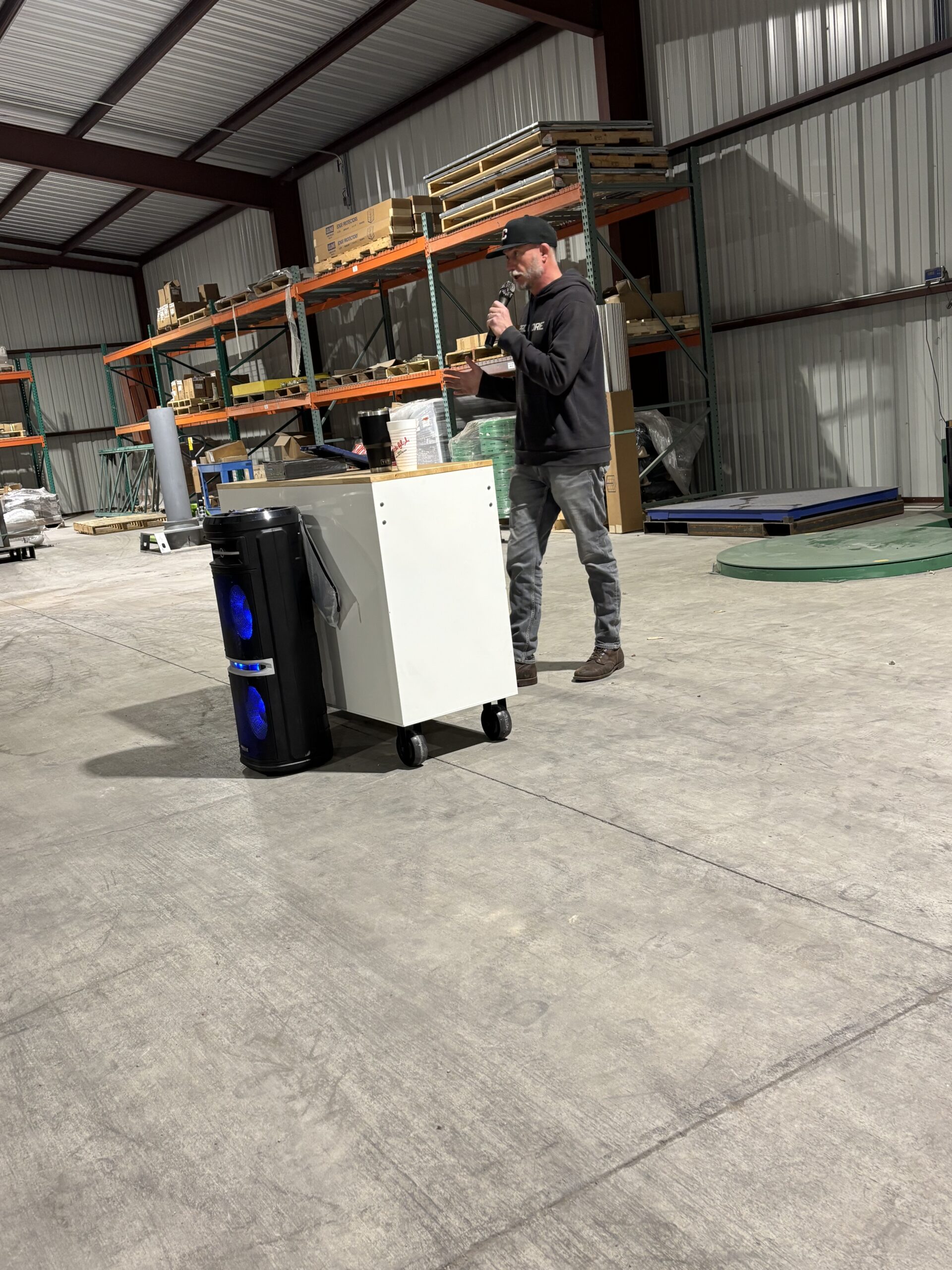
I delivered this testimony in front of nearly 100 men at Gibraltar’s shop in Burnet, Texas on April 8, 2026. I was invited by Rodney McGee — my ex-wife’s father, my spiritual mentor, and the man who baptized me. What follows is the story I told them — about unconditional love, faith lived out daily, and how iron sharpens iron.
Thank you, Rodney.
Before I say anything else, I need you to understand something about the man who just introduced me.
Rodney McGee is my ex-wife’s father.
I know. Stay with me.
About nine years ago, I was the worst version of myself. I’d wrecked my marriage. I’d been fired. I was drinking my way through my kids’ childhood. And the man whose daughter I’d hurt — the man who had every reason to shut the door in my face — opened it instead. He took me into his home, walked with me, and eventually led me to Christ.
That’s who Rodney McGee is. And the fact that he’s given me the honor of standing here today — I don’t take that lightly.
My name is Matt Kelly. I’m not a pastor — if you knew me, the fact that I have to even say that is laughable. I sell construction software for a living today. Before that, I worked in steel. Before that, I bent rebar in a fab shop in Florida. Before that, I was a kid in Gainesville running with a crew that taught me how to break into houses and sell guns before I graduated high school.
I’m certainly not here to preach at you today. I’m just going to tell you some of what’s happened in my life. And if any of it sounds familiar, then maybe today was supposed to be for you.
three doors
I closed the bedroom door. Then I walked into the bathroom and closed that door. Then I opened the closet, stepped inside, and closed that door too.
Three doors. That’s how many I needed between me and my own life before I could sit down and breathe.
Houston. 2016. I’d turned the shower on so my wife would think I was in there. Past the shower, past all those doors, I could hear my boys in the other room. Muffled. Distant. Like they were in another house. And in a way, they were. I’d mentally been in another house for years.
I sat cross-legged on the carpet with a twelve-dollar meditation app on my phone. Not the Bible. Not a church. I opened a timer on my phone — a man so desperate for silence he’d locked himself in a closet with the shower running as cover.
I’ll come back to that closet. But first I need to tell you how I got there.
the kid
I grew up in Gainesville, Florida. My dad was there — doing his best to keep us safe and fed, like any good man. He taught me work ethic and discipline. Not always the way I wanted to receive it, but better coming from him than the world some days.
But the rules had their effect. I learned to escape early. I found a small crew of acceptance in high school — Josh, Mike, Ric — guys a little older and bigger than me, which didn’t say much. I was the youngest and the smallest. Hundred and fifteen pounds soaking wet. They taught me how to drink beer, how to smoke weed, how to break into houses and sell guns. By senior year I was skipping school, smoking during the day. We were tight and we knew the code.
I was lucky. I was a nerd with good grades. If it weren’t for the books and the straight A’s even while I was ditching school, this story ends very differently. I got into the University of Florida and remade myself. Same city, but new crew, new story. But I wasn’t fixed. I was just performing a new version of the same broken kid.
the shop floor
After college I thought I had it figured out. Engineering degree. Smartest guy in the room. My first real job? Bending rebar in a fab shop in Plant City, Florida.
The woman they assigned to train me was named Rose. Rose had lost three-quarters of her thumb between a #11 bar and a bending pin. That was her first lesson.
“Don’t let your thumb get between the bar and the pin,” she said. “Your thumb will lose every time. Trust me.”
Lesson received, boss.
Plant City in the summer — hot and swampy. Mill scale everywhere. My shower was black. Rose was probably fifty, which is ironic considering I’m about to turn fifty this October. I was twenty-two, straight out of college, smelling like entitlement. That shop taught me more about respect and toughness than any amount of years of textbooks. From there I worked my way up — steel companies, traveled the world. I had the truck and the title.
But here’s what nobody tells you about the self-made man. He’s usually running from something.
the fall
From 2009 to 2017 — eight years — I was under the influence of something almost continuously. The substances changed. The pattern didn’t. The point was to not feel what I was feeling.
A therapist in Dallas named it for me. She said, “That feeling you’ve had your entire life — that’s anxiety.” Then she said, “It’s going to get much, much worse before it gets better.”
I almost laughed. Anxiety was for men who were weak. Then it got much worse.
Bankruptcy. Fired. Marriage falling apart — and I was doing most of the damage. I had two boys, Brock and Jack. I was at almost every bedtime they had when they were little.
I was sober for almost none of them.
Some of you know what that’s like. You’re there but you’re not there. And that guilt makes you numb yourself more. It’s a cycle.
And the whole time, I would have told you I was a good person. That’s what I told Rodney when he first talked to me about faith. “Rodney, I’m a good person. I help people.”
No, I didn’t. I was destroying everything around me without realizing it. That’s the scariest kind of broken — the kind that thinks it’s fine.
back to the closet
So that brings us back to the closet.
I remember fighting with my wife, the kids crying, upset about something like always. And I needed to get away. I escaped. But not to alcohol this time. Bedroom door. Bathroom door. Shower on. Closet door. Finally a little silence.
I sat on the carpet and I talked first. Out loud. Asked God if He was there. If maybe He’d hear me. Nothing. So I stopped talking and just sat. Focused on my breath. Tried to let my mind settle. I could feel the carpet on my bare legs. I could hear the muffled sounds of my boys, far away, past all those doors.
At some point, something changed. A warmth in my chest. I felt like I was falling, but I wasn’t afraid. It was strangely comforting. No voice. No vision. But a knowing — an intuition I can’t explain — that things would be okay. That I just needed to trust in what was coming.
I didn’t walk out of my bedroom a Christian. I walked out a man who thought maybe he wasn’t completely alone. That was enough to crack the door open. I’d spent all night closing doors. And God opened one anyway.
the surrender
2017. Fired in Houston. Nowhere to go. I left my wife and kids behind while I moved to Burnet, Texas — three hours away — to live with Rodney. I visited them on the weekends, leaving Friday nights late and getting in after the kids were asleep. Leaving Sunday afternoons after lunch so I could be back at Rodney’s at a decent time, get some rest, and do it all over again on Monday. It would be nearly six months before they’d move to Austin and we’d squeeze into a tiny two-bedroom apartment — two kids, three dogs, my wife, and me.
I told you who Rodney is. Now let me tell you what he did. He let me into his home. Fed me. Talked to me. Didn’t shame me. Just loved me. Day after day.
And Bill Neusch — the man who built this company, this shop — gave me a job when nobody else would. But there was a condition. If I was going to work for Bill and live with Rodney, I had to give up drinking.
That was the hardest part. Sitting with all those emotions I’d been numbing for a reason. The numbing led to more mistakes, which made me numb more. As long as I wasn’t present, I could pretend I wasn’t the villain I’d become.
But here’s what those two men showed me. Rodney showed me love — unconditional, patient, steady love. The kind I’d never seen from a father figure. And Bill showed me the practical side — how to actually walk it out daily. How to put faith into practice. Not as a Sunday thing. As a way of life.
November 13th, 2017. Monday night. Rodney’s living room. I was on my knees, trying to ask Jesus into my life. I leaned on Rodney for the words because I didn’t have the courage to step into this new world on my own.
I reached the end of myself. I had nothing left. And for the first time in my life, I stopped running.
the daily work
Now — accepting Christ isn’t the finish line. It’s the starting line. I’ve heard that some people have an instant awakening, but it wasn’t like that for me. Nothing magically changed overnight. What changed was that I started doing the work. I started picking up my own cross daily and doing the hard work it takes to build a better version of myself for my family — and started leaning into becoming a better man.
I used to think the Bible was full of lies about perfect people.
It’s not. It’s a book about failed men and the mistakes that took them away from God. How when they lived as if the knowledge was theirs alone — like they’d eaten from the tree of the knowledge of good and evil and didn’t need Him anymore — everything fell apart. That knowledge is God’s. And you receive it through a relationship with Him. By asking questions, praying for answers, and then sitting. Patiently. Waiting.
I never wanted to believe in God. Partially because of what I’d seen growing up, and partially because waiting until I died to find out the truth seemed like pure manipulation by the powerful. I refused to fall for it.
But once you accept Him, you find out the magic is real. And the lie that He’s NOT real — that comes from the world trying to hold you back. Trying to keep you in the prison of your own mind.
The shackles and prisons of this world are very real. But they started long before any cell door closed. They were the lack of any kind of model for unconditional love in your life. The lack of the right model. Jesus came to give you that blueprint. And it’s all right here in this book.
Let me tell you what the work looks like. Every day, my day starts between four and five in the morning while the house is still quiet and asleep. I grab my book, my coffee, a candle, and I sit outside. Every. Single. Day. No excuses. Nothing interrupts that time if I can help it. That’s sacred.
I read a chapter. Then I sit and close my eyes. I reach with my mind for Him and silently tell Him I’m here. And I wait.
Here’s what I’ve learned about that waiting. God takes His time. You might sit there for thirty minutes before your mind even settles. If you’ve never sat alone with your thoughts, they’ve built up into a web of lies.
Think of it this way. Take a glass of water, fill it with dirt, and shake it. That dirty water is your mind. All those memories and thoughts and feelings of hurt and pain — they’re swirling. You have to let them settle. Let the clouds pass by. They’re the distractions holding you back.
You know the blue sky and the sun are out there. You just can’t see them yet. When you accept Christ and sit with Him consistently, those clouds will part. But you have to be patient. You have to show up. Day after day.
I might have a college degree. But the man who taught me how to do this — Bill Neusch — has a high school diploma. And he is one of the most successful men I’ve ever known. Not because of money or titles. Because he has love. He built a family around it. He’s the patriarch who built a legacy because he believed.
You might think Bill had some special gift you don’t have. He doesn’t — he has Jesus. He shows up and sits with Him in the silence every morning. Every. Single. Day. And he helped me find my faith by letting me watch him live his.
When we worked together on a project in San Diego, we were all early risers. And I got to see it up close — the discipline, the consistency, the peace that comes from a man who starts his day with God before he starts it with the world.
That meditation practice I started in that dark closet? I haven’t missed a day in over 1,400 days. Almost four years straight.
If something had the power to change your life — to take you from where you are right now to somewhere you can’t even imagine next year — could you sit in the silence for an hour? Are you willing to make the hard sacrifices it takes to be a completely different man twelve months from today?
the miracles
The miracles started coming. In July of 2022, after divorcing Rodney’s daughter, I rolled my Jeep three times. When we landed — wheels down in an empty field surrounded by rocky cliffs and trees in every direction — I realized we had landed in the only patch of land we could have survived.

Worse yet, when I looked in the backseat, my youngest son was bleeding from his head pretty badly. But worse than that — my oldest son was gone. He’d taken his seatbelt off at some point during the drive and I had no idea where he was. Instantly I panicked. My worst fears swirled in my head.
Then I heard his voice. “My back!” he screamed. Thank you, Lord, that he’s still alive — that was my first thought. I ran to find him, told him to stay still. Thankfully some good Samaritans stopped to help us. When the ambulance finally took us to the hospital, the MRIs and X-rays confirmed the miracle. Two broken ribs was the extent of the damage.


We got a house loan we had no business getting. During COVID, checks showed up when we had nothing and we were about to lose that house. Bill was feeding us at the office when everything was closed.
And then, after Biden was elected and the border wall work disappeared in the stroke of a pen, I was praying about what was next. That same week, an old friend reached out — someone I hadn’t heard from in nearly a decade. She offered me a job in construction technology, selling software. After all the miracles I’d just witnessed since accepting Christ, was I really going to abandon Bill and leave Gibraltar?
I was interviewing with a company called Constru, asking God for a sign — and I look up:
CONSTRU AHEAD

That job didn’t work out. But it led me to the largest construction technology platform in the world, where I became the top enterprise sales rep. None of it happens without the wrong turns. None of it happens without Bill. None of it happens without Rodney.
the good samaritan
Would you stop what you’re doing today and save your mortal enemy’s life? Be honest. I barely stop to help someone on the side of the road because I’m too worried about where I need to be. I’ve driven by accidents like the one my boys and I were in — the one where strangers stopped and saved us — without even slowing down. Shame on me.
This world separates us. Demonizes us to each other. Keeps us feeling like enemies instead of brothers. Jesus came to undo that. To humanize us to each other.
“Whatever you’ve done for the least of these, you’ve done for Me.”
I’ve been the least. I know what it feels like to be unseen. But I’ve also been the one walking and driving by. Those are the things that convict me today that I never saw before.
the lobby
This past February, I was standing in a lobby at a church in Austin. My three boys in front of me — Brock, Jack, George. All of us in our “ALL IN” t-shirts and bathing suits. Nobody cutting up. Just a quiet peace. An acceptance of what we’d decided to do.
To be honest, my boys were the ones who finally convinced me to do it. They were ready. They’d seen me awake and in the Word, just like I had learned from Rodney. They had their grandfather’s influence long before they had mine. They had an advantage over me — they’ve known Rodney McGee their whole lives. I met him in 2010, but I hadn’t actually taken the time to know him until probably 2020 or 2021. Long after I’d been on my knees in his living room. It took a long while for God to take out my stony, stubborn heart and give me a tender, responsive one. But I’m glad He finally did.
I was standing behind them feeling something I’d chased my whole life without knowing it. Not success. Not money. Peace.
My three boys and I — Brock and Jack along with my stepson George — walked out into the congregation together. I was baptized at forty-nine, with my sons beside me in the water. And the man who baptized me? The man who just introduced me. Rodney McGee.
If that’s not grace, I don’t know what is.


the prayer
I want to close by showing you how I start every single day. Because I don’t want any of this to be theory — I want you to walk away from this with something you can actually use.
My pastor Randy Phillips at LifeFamily told us something that blew my mind. He said the Lord’s Prayer was never meant to be a script. It’s a model. A structure for how you pray — not what you say every single time like a spell or an incantation. Jesus wasn’t giving us magic words to repeat. He was teaching us how to talk to God. Some Christians pray for one to two hours a day. I couldn’t believe that when I first heard it. But once you understand the concepts behind each line, you realize the prayer isn’t seven sentences — it’s seven doors into a conversation that could last all morning.
That idea changed everything for me. And it’s been deepened through two groups of men I couldn’t imagine my life without these days — a Thursday lunch Bible study led by my friend Joseph Hauss with men from LifeFamily, and a Friday morning men’s group at Lake Hills Church led by my friend Brian Trzupek. Those men have shaped my faith more than almost anything else in my life. We typically read from the NLT or NIV, occasionally peeking back at the King James, but more often than not we find ourselves digging into the original Greek — like we’re about to do right here — because that’s where the deeper meaning lives.
I think my dad struggled with this his entire life. He went to churches that said different versions — one said “debts,” another said “trespasses” — and I think it confused him. I think he memorized the words like they held some kind of magic power. Like if you got the words right, God would hear you. If you got them wrong, maybe He wouldn’t.
But that’s not how any of this works. The words aren’t the point. The concepts are. That’s where the peace is actually found. At least that’s been my experience.
Even though I read the NLT Bible, I still say the Lord’s Prayer in the old King James in my head. It’s the version I memorized. But I don’t just recite it anymore. I live inside it. Let me show you what I mean.
Line 1: “Our Father, which art in heaven, hallowed be thy name.”
The concept: You’re not opening a business meeting. You’re talking to your Father. The Greek word here is Patēr — and in Jesus’s time, that was intimate. This wasn’t the formal, distant “God of the universe.” This was relational. Personal. The kind of father who knows your name.
And then hagiazō — “hallowed.” It means to set apart as sacred, to treat as holy. Not just respected. Not just honored. In a category by itself. You’re starting your prayer by saying: I recognize who You are, and I recognize that You are above everything else in my life.
How I pray it: Our Father, in heaven — I want to honor your name. Always. Help me honor your name today, in how I treat people, how I speak, how I show up.
This is where I set my intention. Before I ask for a single thing, I acknowledge who I’m talking to. Not a vending machine. Not a wish-granting genie. A Father.
If you grew up in a home where your father wasn’t able to show you what that kind of love looked like — and mine wasn’t, not because he didn’t love me, but because nobody showed him — this line is where it all starts to heal. My dad did the best he could with the tools he was given. I believe that. And I’ve forgiven him for the rest. But when I pray “Our Father,” I’m not talking to the father I grew up with. I’m talking to the Father I was always supposed to have. And through that relationship, I’ve found a kind of love I can now bring back to my own dad — and to my own kids — that breaks the cycle instead of continuing it.
Line 2: “Thy kingdom come.”
The concept: The Greek is basileia — kingdom, reign, rule. But this isn’t about a geographic place. Jesus is asking us to pray that God’s way of doing things would spread. That His values — love, mercy, justice, peace — would take root here, now, in our actual lives. Not someday. Not in the afterlife. Today.
How I pray it: Help me grow your Kingdom and find others that I can help save from the darkness of this world. Help me bring a new generation of people closer to You — not through arguments, but through how I live.
This is the mission line. It’s not about building my kingdom — my brand, my reputation, my portfolio. It’s about building His. And the way you do that isn’t by preaching at people. It’s by living differently enough that they start asking questions.
Line 3: “Thy will be done in earth, as it is in heaven.”
The concept: Thelēma — God’s will, desire, purpose. Jesus is teaching us to surrender. To say: what You want matters more than what I want. And not just when I die — right now. On this job site. In this marriage. At this dinner table. In this conversation with my brother.
“As it is in heaven” means: the same way things work perfectly in God’s presence, let them work that way here. Through me.
How I pray it: Tell me what I need to do today to show everyone around me that I’m a Christian and true to your word — not when I die, but here on Earth while I’m still alive. Help me bring peace to this world and a little piece of heaven to this broken world so that others can see the light you brought.
That’s surrender. Every morning. Thy will, not mine. And if you’ve ever tried to actually live that out for one full day, you know how hard it is. Your will is loud. His is quiet. You have to be still enough to hear it.
Line 4: “Give us this day our daily bread.”
The concept: Epiousios — this is one of the most mysterious words in the entire New Testament. It appears only here, in this prayer. Scholars have debated its exact meaning for two thousand years. It could mean “necessary for existence,” “for the coming day,” or “beyond substance.” But the simplest reading is this: God, give me what I need to get through today. Not next year. Not my five-year plan. Today.
Notice it says “give us” — not “give me.” Even in your most personal prayer, Jesus is teaching you to think beyond yourself.
How I pray it: This is where I ask for His help. Where I tell Him what I need. The deals I need to close. The conversations I need to have. The wisdom I need to help others understand where I’m coming from. The relationships I need to repair.
And more importantly — this is where I listen for what He needs from me.
This is the most practical line in the whole prayer. You’re not just asking for food on the table — although you can. You’re asking for whatever you need to serve the people in your life today. And you’re pausing long enough to hear the answer.
Line 5: “And forgive us our debts, as we forgive our debtors.”
The concept: This is the one that trips people up. And I think it’s the one that tripped up my dad his entire life.
Here’s why: depending on which church you walked into, you heard a different word. The KJV says “debts” — opheilēma in Greek, which literally means something owed. A deficit. A hole you’ve dug. The Book of Common Prayer, which is where millions of people actually memorized this prayer from — not from the Bible itself, but from church liturgy — uses “trespasses.” And the NLT just says “sins” — the Greek hamartia, which comes from archery and means “missing the mark.”
He wasn’t wrong to be confused. He was hearing three different metaphors for the same reality, and nobody ever explained to him that they’re all pointing at the same thing:
Debts says: you took something. You owe someone. You’re in deficit with the people around you.
Trespasses says: you crossed a line. You violated someone’s space, their trust, their dignity. I’ve done that too. I’ve stepped on people’s toes and said things that violated their personal territory.
Sins says: you missed the mark. The target was love, and your arrow went somewhere else.
They’re all true. They’re all pointing at the same gap between who you are and who God made you to be.
Here’s why the word doesn’t matter as much as the concept: Jesus covered all three on the cross.
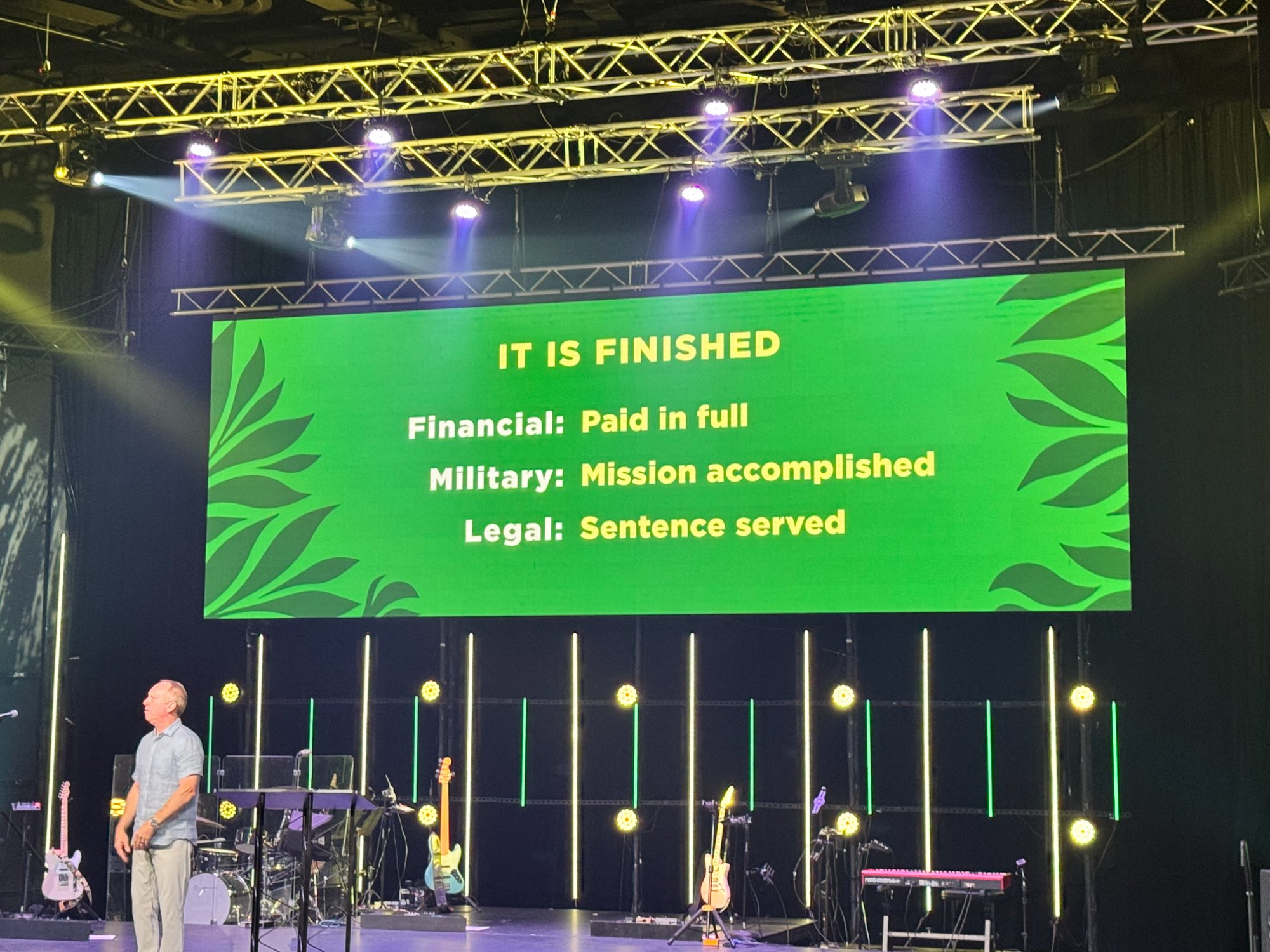
This past Easter at Lake Hills Church in Austin, Pastor Mac Richard put something on screen that brought this specific question — debts vs. trespasses vs. sins — into focus. When Jesus said “It is finished” — tetelestai in Greek — that single word carried three meanings from the ancient world:
Financial: Paid in full. It was stamped on receipts when a debt was settled. Nothing left to owe.
Military: Mission accomplished. It was the report delivered when the objective was complete.
Legal: Sentence served. It was written on a prisoner’s certificate when they’d done their time. You’re free to go.
Jesus wasn’t picking one metaphor. He was settling all of them at once. Your debts? Paid. Your trespasses? Pardoned. Your sins? Covered. The question isn’t which word your church uses. The question is whether you believe it’s already been handled — and whether you’re willing to extend that same grace to the people who owe you.
And that brings us to the part most people miss — the most important part of this entire prayer: “as we forgive our debtors.”
This isn’t optional. This isn’t a suggestion. Jesus is saying: the forgiveness you’re asking for? You only receive it to the degree that you give it. You want God to forgive the holes you’ve dug? Then you have to forgive the people who dug holes in your life. You want God to overlook your trespasses? You have to stop holding other people’s trespasses over their heads.
Think about that. Rodney McGee’s daughter — my ex-wife. I hurt her. I hurt their family. And the man who had every right to hold that debt over my head for the rest of my life… forgave it. Took me in. Led me to Christ. Baptized me. That’s what this line looks like when someone actually lives it out.
How I pray it: Forgive us our debts and trespasses, as I have been forgiven my own mistakes and sins and the evil I’ve put into this world. Because that’s what those debts are — they’re the holes I’ve dug in the relationships around me. The beliefs others have of me that I need to overcome. And the only way to overcome them is through new actions and a returning to Him. Begging for forgiveness once you realize how badly you’ve strayed from His perfect plan for you. The same way you hope for that for your own children.
Line 6: “And lead us not into temptation, but deliver us from evil.”
The concept: Peirasmos — temptation, trial, testing. And ponēros — evil, the evil one. Jesus wraps these together because they work together. Temptation is the doorway. Evil is what’s on the other side.
This is the line where you get brutally honest with God about the things you’re still fighting. The habits you haven’t beaten yet. The patterns that pull you away from the man you’re trying to become. The ways you still fall short as a husband, a father, a friend. Everyone’s list is different. God already knows yours. This is where you say it out loud — not because He needs to hear it, but because you need to hear yourself say it.
How I pray it: Help me resist the things that pull me away from my family. Help me focus my heart on my wife. Help me stay present — not numbed out, not checked out, not hiding behind habits that make me feel better for five minutes and worse for five days. Protect me from the darkness I already know is out there — because I’ve been that darkness before.
Well — maybe Rodney doesn’t need this one. But the rest of us humans sure do.
Line 7: “For thine is the kingdom, and the power, and the glory, for ever. Amen.”
The concept: This closing line — called the doxology — doesn’t appear in all ancient manuscripts. Some Bibles include it, some put it in a footnote, and the NLT usually leaves it out of the main text. But most of us who memorized the prayer in church grew up saying it.
And I think it matters. Because after six lines of petition — after asking, surrendering, confessing, begging for protection — you end by giving it all back. Yours is the kingdom. Yours is the power. Yours is the glory. Not mine. Not ever.
It’s the closing that puts everything back in perspective. You started by acknowledging who God is. You end by acknowledging who you’re not.
How I pray it: Because at the end of all of it — the asking, the confessing, the surrendering — none of this is about me. It’s all Yours. The kingdom I’m trying to help build is Yours. The power to change my life comes from You. And whatever good comes from any of this — the glory belongs to You. Forever.
Amen.
I’ve been that evil before. Let me let you in on something in case you haven’t already figured it out. There aren’t good people and bad people in this world. Good and evil runs through the center of every human heart. And He has given us the free will to choose — whether we seek a relationship with Him, and peace and love, or whether we push Him away and live life on our own terms and our own selfish ways.
I used to think selfishness was only when you had a lot and didn’t use it to help others. But it also shows up when you have nothing and you pretend your life is all about poor little you and your victimhood. Stop playing the victim and start playing the survivor instead — and watch how your life changes.
I don’t ever understand why people get all hung up on reciting the same words over and over again. No amount of chanting or repeated phrases will help you find God. You have to learn the concepts, not the words. Understand the meaning and the intent — and not just spit out verses to make someone feel small. The whole point of the book is to show you how to have better relationships with other humans, and that through helping others, you will have a better life.
There are a couple different translations that we read in my men’s group — usually NLT or NIV, occasionally peeking back at the King James, and more often than we probably expected, looking at the original Greek. And each man has a different version of Jesus that he has his relationship with — because they each have a different personal relationship with Him that only comes from spending time with Him daily.
When you only search for God on Sundays when you have a break in your busy schedule to make it to church, you’ll miss the entire point of what He came to preach.
Take the lessons that God has given you. Because that’s what they are, believe it or not. They’re a gift. They’re how you help others in this world — by reaching out and helping them not fall into the same holes you fell into. Be a mentor. Be a Samaritan to your neighbor. Love others as yourself.
iron sharpens iron
I started this story in a closet. And I’ll tell you what — it feels pretty good to have finally come out of it.
Three doors closed. Shower running. A man trying to put as much distance as possible between himself and his own life.
I’m standing here today because two men opened the door instead.
Rodney didn’t use a computer to save my life — I don’t think he really even knows how to turn his on. Bill certainly didn’t use software to put food on my table — although in a way, he does today. But they started by using their hands. They laid them on me and prayed for me. They gave me their time and more importantly, their presence, when no one else would. Their patience — dealing with my hubris, my arrogance, my ‘knowledge.’ They showed me what love truly looks like between men. Brotherly love. The way iron sharpens iron. That’s what grace looks like when it puts on work boots.
You’re not a burden to anyone. You never were. You’re a man in the middle of becoming.
The hardest thing you’ll ever build is inside of you. And that’s the thing your family, your friends, your kids and grandkids and everyone in your personal orbit inherits. That’s the thing that lasts.
You might be the Rodney in someone’s life and not even know it. Don’t walk by.
Thank you. God bless you guys.
Related: Starting Over: A Letter to the Man I Was in 2017
If this resonated, The Rebuild newsletter is for you.
Faith. Leadership. Starting over. Delivered to your inbox.