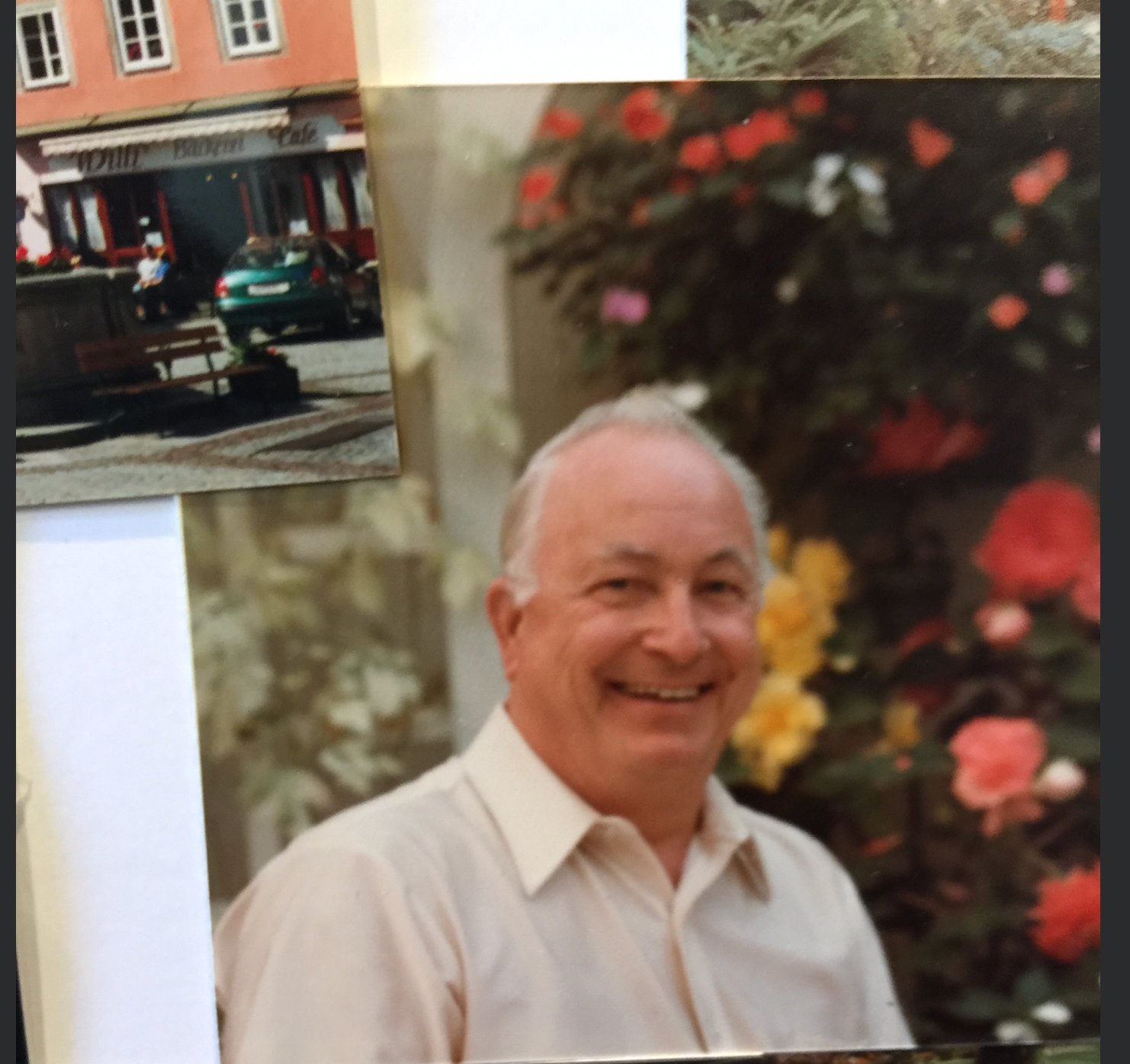
Generational Curses
I’m almost fifty years old, and I just figured this out.
Not the surface stuff — I’ve known for a long time that my family was complicated, that I carried things I didn’t choose, that I repeated patterns I swore I’d never repeat. That part isn’t news to anyone who’s been paying attention, least of all me.
What took me this long to understand is why. Where it started. How two men who both survived a World War and both believed in God could come home and build two completely different kinds of families — and how those two families collided when my parents got married and created the house I grew up in.
I’m still figuring most of this out. But I’ve learned enough to know that when you finally see a pattern clearly — really see it — you can’t unsee it. And I wonder if you might recognize some of this in your own family. I did, and it took me forty-nine years.
Stay with me. Even if it’s 2 AM and you can’t sleep and something is pulling at you that you can’t quite name. Especially if that’s where you are.
Two Houses

I had two grandfathers. They couldn’t have been designed more differently if someone had done it on purpose.
Maybe someone did.
Pop’s house smelled like aftershave and my grandmother’s perfume. Saturday mornings, I’d wake up wedged between them in their bed — a six-year-old sardine crammed between his two favorite people on the planet. They didn’t want me there. What grandparents want an elbow in their ribs at 5 AM? But I wanted to be there, and they made room. That’s what love looks like when it’s done right. You make room even when there isn’t any.
Before anyone was awake, I’d sneak into the kitchen and pull down the Cocoa Krispies — the good cereal. One morning, we’d run out of milk and I didn’t want to wake anyone, so I grabbed the heavy cream from the fridge and poured it over the top. I’m pretty sure I found a piece of heaven for the first time that morning. Mere was a little upset that I’d used up all the creamer for her coffee — but not upset enough that I didn’t do it almost every time after that. And most mornings, they’d just come downstairs and find me at the dining room table, chocolate milk dripping down my chin, watching cartoons like I hadn’t just committed a felony against their groceries.
They just shook their heads and gave me grace.
That’s the word. Not permission. Not approval. Grace. They didn’t condone the Cocoa Krispies heist. They just loved me more than they loved being right about breakfast. I looked forward to it every single weekend. Just thinking back to it gives me diabetes.
Pop owned Farrow’s of Haddonfield, a gift shop on King’s Highway in Haddonfield, New Jersey. He served in the South Pacific as a Navy SeaBee during World War II, and when he came home from whatever he saw over there, he decided to spend the rest of his life doing anything he could to put a smile on people’s faces. Through the various gifts and cards in his shop, he’d bring people happiness. We’d walk up and down King’s Highway together — from Farrow’s to the bank, to the barber, stopping at The Happy Hippo toy store where the LGB trains always caught my eye. Or maybe they caught Pop’s eye first. I’m still not sure. But on every walk, no matter how short or how long, he would get stopped by dozens of people. He seemed to know and love everyone, and everyone knew and loved him. But man, did it take forever to get anywhere with all that stopping and talking — how were we EVER going to get to the toy store? He loved people and people adored him.
Before I knew it, we had a small train setup in the basement that would grow over the years into one of my favorite places on earth. He didn’t build that train set to keep us busy. He built it to keep us close. He craved time with us, and even as a little boy, I could feel that — the weight of a man’s genuine desire to simply know his grandchildren.
Every December, he’d dress up as Santa Claus. One Christmas, when we were living in Wilmington, Delaware, Pop drove down to surprise my brothers and me. But there was no fooling me. Santa was wearing Pop’s shoes. Santa smelled exactly like Pop’s aftershave. And finding out the truth that way almost didn’t hurt — because I couldn’t have imagined Santa being a better man than my Pop anyway.
He was taken from me far too soon. I never got the chance to say a proper goodbye. Throwing his ashes into the bay at Stone Harbor was the first time I ever had to say goodbye to someone I loved. Nearly forty years later, I still feel it.
My Mere tried to fill the gap after he was gone. She did her best. It was never quite the same — the man who held it all together had left, and the rest of us had to figure out how to carry what he left behind. That said, I probably never would have gotten to travel with my Mere if Pop was still around. Life’s ups and downs present all kinds of new and different opportunities if you’re open to them.
The Voice in the Water

There was a summer at Pop’s house — I couldn’t have been older than eight or nine — when I was swimming alone in the backyard pool. Diving to the bottom the way kids do, trying to hold my breath as long as possible, playing whatever game you play when you’re small and the water is warm and there’s nowhere you need to be.
I remember going under and hearing something. Not a sound, exactly. More like a pull. A voice that wasn’t a voice, calling me toward the surface.
When I came up, there was nobody there.
I called out to Mere and Pop. They finally came outside, but they told me they hadn’t been calling. I was sure I’d heard that voice. To this day, I wonder who that guardian angel must have been.
I tucked it away the way kids tuck things away — in that drawer in the back of your mind where the things you can’t explain go to wait. I would not think about it clearly for another forty years. But it never left. It was always there, waiting for me to be ready to hear it again. I just didn’t know yet that the voice calling me toward the surface was the same one that would eventually call me out of a much deeper kind of water — the kind where you’re drowning and don’t even realize it because you’ve been under so long that it feels normal.
Grandfather Kelly’s House

Grandfather Kelly’s house smelled like mothballs and old wood. But it also smelled like my grandmother’s cooking — rhubarb pie with vanilla ice cream is a dish I can still taste if I close my eyes long enough.
His name was Lloyd. Very proper. During the war, he was stationed in England as a sergeant — some kind of advanced mechanic, my Dad thinks, though he couldn’t give me many details beyond that. What we know is that he served his country faithfully, he came home, and he built a life the only way he knew how to build one.
With rules.
We called them Grandmother and Grandfather Kelly. Never anything warmer. You sat at the table and you did not participate in adult conversation. You ate what you were given. You said grace before every meal — “God our Father, we thank you for the food we eat and loving care. Be with us here and everywhere. Amen.” — in exactly the same voice every time. My brother actually had to remind me of that last line. The toys were my father’s old toys, like we were an afterthought to a house that had already moved on.
I don’t want to paint it all as darkness. It wasn’t. There were lessons in that house that I carry today — discipline, respect, the understanding that showing up matters whether you feel like it or not. Those aren’t small gifts. But the feeling in the house was heavy. And a child feels heaviness before he can name it.
There’s a story I carry from that house that I’m not proud of, but it’s honest, and honest is what I promised.
One Sunday morning, we were running late for church. I was six, maybe seven. I needed to use the bathroom and my grandmother said we couldn’t be late. I couldn’t hold it. Pee started running down my leg, and in that instant — out of pure reflex and terror — I screamed two words that a six-year-old probably shouldn’t know how to deploy so effectively: Jesus Christ.
She slapped me across the face. Shoved a bar of Dove soap in my mouth. And told me I was going to hell.
I am approaching fifty years old. I still cannot use Dove soap.
For most of my life, I held that memory with nothing but hurt. I understand that hurt. A scared six-year-old doesn’t need rules. He needs comfort. But I’ve sat with it long enough now to see something else behind it — something I couldn’t have seen as a child.
My grandmother didn’t go to war. She never saw what my grandfather saw overseas. But she lived with a man who did — who came home carrying something that had no name in 1945. We’d call it trauma now, but they didn’t have that word then. What they had was: get up, go to work, join the pipefitters union outside Philadelphia, don’t fall apart. He built a world of walls because walls were what had kept him alive. And she lived inside those walls with him. She raised children inside them. She ran a household by the only rules that house had available. I think she absorbed his rigidity the way a person absorbs the weather of the house they live in — not because it was her nature, but because it was what surrounded her.
That doesn’t make what happened to me okay. A six-year-old in a puddle of his own fear doesn’t need theology. He needs someone to kneel down and say it’s going to be alright. But I can hold both things now — the hurt of that moment and the understanding that my grandmother was doing her best inside a structure she didn’t design. She was carrying his war too, even if she never knew it.
And if that’s what religion looked like — if that’s what God looked like — I didn’t want any part of it. I carried that conclusion for a very long time. It would take decades and a very patient man to show me that what I experienced that morning had nothing to do with God. It had everything to do with what happens when love gets buried under rules so deep that nobody in the house can find it anymore.
The rules weren’t the absence of love. They were love wearing the only armor that house knew how to put on.
The Grandmother My Cousins Knew

I need to say this, because this story isn’t only mine.
My cousins loved their grandmother. Deeply and without reservation. The woman they describe is not the woman I experienced on that cold Sunday morning. Through their eyes, she was warm. She was present. She was the matriarch who held their world together, and their grief when she died was real and earned, and I have no right to take that from them.
My aunt — Judy Poole, my Dad’s sister — went on to become the headmistress of Abbotsleigh, an all-girls school in Sydney, Australia. She built a life of leadership and education on the other side of the world, and through her and through my cousins, I’ve been fortunate to understand that my grandmother was a different woman to them. She was capable of a tenderness that I didn’t get to see enough of — or maybe that I wasn’t in a position to receive at the time.
I remember stopping through Sydney in December of 2011 on my way to see my friend Kate, who I had met at my cousin’s wedding the year prior, in New Zealand for three weeks. I was looking forward to traveling and seeing both the North and the South Islands. But I had a connection in Sydney and took advantage of a quick trip to Abbotsleigh between my flights for a meal. My Grandmother Kelly was in town, in fact, and we hadn’t talked in quite a while. It was so nice to hear of her travels to India and hear stories I had never heard before. I think that was one of the last times I saw her before she died.
I wish I’d had more moments like that one. Sitting across from her without the weight of the house between us, just two people sharing a meal and stories. I caught a glimpse that day of the woman my cousins knew — curious, traveled, full of life. And I’m grateful I got that glimpse, even if it came late.
I want to honor her. Whatever happened between her and me, she was still someone’s beloved grandmother. She was still a woman who raised children and kept a home and did the best she could with whatever she and my grandfather were carrying together. Both things can be true. A person can be hard in one room and gentle in another. That doesn’t make either version a lie. It makes them human.
When Grace Married Rules

My mother came from Pop’s house. My father came from Grandfather Kelly’s house. When they got married, grace married rules. And what you get when those two things collide — at least in my family’s case — was always a little tension and never quite enough of the open, easy kind of love.
They worked constantly. We had a four-bedroom house with a pool, a hot tub, a beach house in Cedar Key. On paper, it looked like the dream. And in a lot of ways it was — my parents had drive and work ethic and they provided. I can never complain about what they taught me about showing up and getting things done. But there was a distance in that house. Avoidance. My parents smoked and drank and argued many nights. But… they made up and always slept in the same bed. I told myself that other people had it much worse and that this was what a normal marriage looked like.
My father ran his world by his father’s tools — not because he was a villain, but because that was the only model he’d ever been given for how a man leads a family. Nobody handed him a different one. And nobody told me why our family was the way it was.
We weren’t raised. We were enlisted… or maybe enslaved. I used to complain, but this is where the work ethic came from. I never saw a repair man at our house growing up. I was the official flashlight holder — the kid who could never find the right tool in the right amount of time. But just that alone gave me the confidence to take apart things that I never quite got back together the same way. Knowing that my Dad could do it gave me the confidence to know that I could too. And all those endless weekend projects were important lessons that gave me agency in many areas of my life that I’m grateful for today. I remember my Dad giving me copies of Computer Science magazine — they had a copy of the game “Snake” in BASIC, and I remember typing for days after school trying to get that code to work. When I finally did, I thought it was magic. Forty years later, I’m diving head first into the AI agentic world trying to figure these things out — thanks to my Dad helping me feel confident in computers while I was only in second or third grade.
I left home at seventeen. It happened the way these things happen: gradually and then all at once. Rules had been accumulating for years without the relationship that makes rules feel like love instead of control. I left in silence. It was a long time before we really talked again.
But here’s the thing I can see now that I couldn’t see then: my father wasn’t trying to push me away. He was trying to hold everything together with the only tools he had — his father’s tools. And his father’s tools came from a man who had brought them home from the war. The pattern goes back further than any of us can see clearly. That’s not an excuse for any of it. But it is the truth of it.
The Curse Named
Here’s where I’m supposed to tell you I broke the cycle when my kids were born. I didn’t.
I got married. I had children. And one night in Dallas, I found myself standing in a room with my kids, and I heard a voice coming out of my mouth that I recognized from somewhere I never wanted to hear it again.
I was yelling. Loud and angry the way men sound when they have nowhere to put what’s been building inside them since they were kids in someone else’s house. My children started crying. And in that moment — it hit me like something physical, like a wall coming down — I realized I had become exactly what I had sworn I would never become.
My father’s voice was coming through me. Grandfather Kelly’s voice had once come through my father. I had watched that pattern my entire life. I had named it and hated it and sworn to God I would be different. And there I was. Same room. Different generation. Same voice.
For a long time, I thought the curse was the specific behaviors — the drinking, the fighting, the dysfunction I could point at and say “I won’t do those things.” I thought if I avoided the specific symptoms, I’d escape the disease.
That’s not the curse.
The curse is the absence of a model for unconditional love. If no one ever showed you what it looks like to love someone without a performance review — without withdrawal when they disappoint you, without punishment for the wrong word at the wrong moment — then you don’t know how to do it. You may want to desperately. But wanting and knowing are not the same thing.
That’s not a character flaw. That’s a wound being passed forward. It doesn’t make you a bad person. It makes you a person who needed something they never received, reaching into the next generation with empty hands.
We can either use our pain to help others or to make others feel what we felt. I’ve done both. I have only regretted the latter.
The Breaking
I was sitting alone in my bedroom in Houston.
I had started sitting in the quiet every night because something in me knew I needed the kind of silence that doesn’t come from just turning off the television. Real quiet — the kind where there’s nowhere left to go and nothing left to hide behind.
Something happened in that room. I can’t give you a clean theological explanation for it. The only way I know how to describe it is: warmth. Brightness. A knowing that arrived the way the sun arrives — you don’t argue with the sun. You don’t have to decide whether to believe in it. You just feel it.
I met a man named Rodney McGee around the holidays of 2010 after I’d been dating his daughter for several months. He had a way about him that I couldn’t quite place at first — a steadiness, a warmth that didn’t seem to need anything from you. He’s famous among the people who know him for threading truth and love together in a way that somehow gets through the thickest walls. I didn’t know yet how much I’d need that.
Years later, after I’d moved to Houston following my bankruptcy, he came down to check on me. He’d seen the signs that I hadn’t been well. He came to pray with me, to tell me he was there for me, to make sure I was present as a capable Dad and a decent husband to his daughter. After his visit, he left, the way people do. And then he turned around and came back. There’s nothing logical about turning the car around and going back to a place you’ve already left. But Rodney felt God tugging at him, and he turned back around. In 2017, when everything around me was collapsing — after I’d been fired, when I was terrified I’d end up under a bridge somewhere, when part of me felt like I deserved exactly that for the decisions I’d made — he was there. Not because he had to be. Because something in him made him turn around and show his love and compassion for a man that didn’t deserve it one bit.
He didn’t fix me. He sat with me. He helped me feel seen and heard and valued at the exact moment I was most convinced I was worth nothing. And somewhere in that season, he got through the walls I’d spent a lifetime building.
He showed me what the Gospel actually is. Not the version I’d encountered as a terrified six-year-old with soap in his mouth — not the threat of hell and the language of punishment. Something completely different. Something I hadn’t known was available.
“I will give you a new heart, and I will put a new spirit in you. I will take out your stony, stubborn heart and give you a tender, responsive heart.” — Ezekiel 36:26
I fought that man for years before I broke. I’m grateful every day that he was stubborn enough to outlast me.
The Law That Love Replaces
I published this essay for the first time a week before Easter. I thought it was finished.
Then Holy Week happened.
I’ve been reading through 1 John as part of my daily Scripture practice, and during Holy Week, chapter 3 stopped me cold. The whole chapter is about love — real love, not the performative kind. Not love as a feeling. Love as a decision to lay down your life for your brothers and sisters. And tucked inside it is a warning that hit me harder than I expected: “We must not be like Cain, who belonged to the evil one and killed his brother.”
Cain and Abel. Brother against brother. The oldest pattern in the Bible.
I sat with that for a long time. Because I know what it looks like when brothers turn against each other. I’ve watched it in my own family. I haven’t had a real conversation with one of my brothers in almost ten years. We saw each other briefly at a cousin’s wedding in Key West in January of 2025, but that’s not the same thing as talking — not really. My other brother and I, who normally speak nearly every day, had also hit a rough patch. And my own sons — who aren’t small anymore, these are tackle football players who love to hit — had been going at each other that very weekend. They learned to read 1 John 3 for themselves that night.
The pattern was everywhere I looked. Brothers fighting. In the Bible. In my family. In my living room.
Then Matthew 22:37-40 tied everything together. Jesus was asked which commandment was the greatest. His answer was simple: Love God. Love others as yourself. And then He said the thing that changed everything for me — all of the law and all of the demands of the prophets hang on those two commands.
All of them. Every rule. Every commandment. Every standard my grandfather enforced. Every expectation my father inherited. Fulfilled by love.
Jesus didn’t come to add more rules to the pile. He came to show us that if we get love right, the rules become unnecessary. Not because consequences don’t matter — they do. But because when you discipline with a heart of compassion and teaching instead of control and suffering, something different happens. People grow closer to each other. And closer to God.
I think about the people Jesus encountered during His time here. He was betrayed by one of His closest friends for thirty pieces of silver. His own people turned against Him because they wanted a warrior and He offered them a servant. He went to the cross for people who didn’t believe in Him — not to prove them wrong, but to show them The Way.
I think about how hard it is, even as a new Christian, to wrap my mind around someone so perfect that He never made a mistake. He loved everyone, regardless of how He was treated. The only time He truly got upset was when religious leaders were warping and using the law to control people, when the temple had become a marketplace instead of a house of prayer. He wasn’t angry about sin the way most of us think. He was angry about the weaponization of His Father’s love.
That’s the difference between Pop’s house and Grandfather Kelly’s house. Pop’s house ran on the principle of Matthew 22 without ever naming it — love first, and the rest follows. Grandfather Kelly’s house ran on the law without the love underneath it. Both men believed in God. Both men served their country. But one came home and built warmth, and the other came home and built walls.
The curse was never the rules themselves. The curse was rules without love. Law without grace. Structure without tenderness.
And Jesus came to end that curse.
“So it is clear that no one can be made right with God by trying to keep the law… But Christ has rescued us from the curse pronounced by the law. When he was hung on the cross, he took upon himself the curse for our wrongdoing.” — Galatians 3:11-13 (NLT)
The Voice Returns
He baptized me. Six weeks ago. I was forty-nine years old, and when my three sons told me they were ready, I decided it was my time too.
I remember going under the water. The sound of everything becoming muffled — but I could still hear the applause from the people standing around that pool. The water was warmer than I expected. And the first face I saw when I came up was Rodney McGee. Smiling.
There was a morning, not long after the baptism, sitting in the quiet I’d been slowly learning to find — before the house woke up, before the day started pulling in every direction — when something came back to me.
A backyard pool in Haddonfield. Going underwater as a kid and feeling that pull toward the surface. That voice that wasn’t a voice. Coming up and finding nobody there.
I sat in the silence for a long time.
The voice didn’t leave. I just forgot how to listen. It had been calling me toward the surface my whole life — through the quiet in Houston, through Rodney turning the car around, through the water at the baptism. The same voice. Patient enough to wait forty years for me to stop swimming away from it.

The Pattern Still Speaking
If my brother reads this — I love you and I miss you. That’s it. No conditions. No agenda. Just call me.
That’s what Easter is, isn’t it? An open door. A table set for people who don’t deserve to sit at it. A God who doesn’t wait for you to get it right before He offers you everything.
What You Don’t Have to Keep Carrying
I have four kids who are watching me the same way I watched my grandfathers. They’re forming their own blueprints right now, based on what they see me do — not what I tell them to do. I’ve been both men. I’ve been the grandfather who raises his voice and demands compliance. And I’ve been the grandfather who builds a train set in the basement because he wants his people close.
The curse doesn’t end when you fix everything. You never fully fix it. The voice still shows up. My Dad’s voice still lives in my head daily. It even still comes out of my mouth sometimes, and when I catch it, I still hate it and swear not to do it again. Maybe next time I won’t have to ask for forgiveness.
But the difference between a curse and a legacy is awareness. It’s the willingness to name what was passed down, to honor the men who passed it down without pretending it didn’t cause damage, and to choose — every single day — to build a different house.
You don’t help your children by keeping the worst parts of yourself from them. You help them by healing yourself so they won’t need to.
My grandfathers both survived things I cannot imagine. They came home and built lives and did the best they could with what the war and the world had left them. I’ve made my peace with both of them.
Pop’s warmth wasn’t an accident of personality. It was a choice he made every day — to come home from the South Pacific and fill a house with aftershave and heavy cream and train sets in the basement and show up as Santa Claus every December because his grandchildren deserved to feel like the world was full of magic. That is an act of will. That is a man choosing love on purpose.
And Grandfather Kelly’s rules weren’t the absence of love. They were the language of love that a wartime veteran had available to him. He gave what he had. I honor him for that.
What I choose to carry forward is the gift in both of them. Not the wound.
“Don’t copy the behavior and customs of this world, but let God transform you into a new person by changing the way you think. Then you will learn to know God’s will for you, which is good and pleasing and perfect.” — Romans 12:2
The renewal has to come from somewhere outside the pattern. You cannot think your way out of a system you were born into. Willpower won’t get you there. Something has to enter from outside. That’s what the man who turned the car around was for me. That’s what going under the water was for me. That’s what the voice at the bottom of the pool was, forty years before I understood it.
And that’s what Easter morning is. The promise that every dead thing — every broken relationship, every inherited wound, every pattern you thought was permanent — can come back to life. Not because you earned it. Because it was given to you before you ever asked.
For the Man Reading This at 2 AM
If you’re still here — and I mean that literally, something pulling at you that you can’t quite name — here’s what I want you to do. Not tomorrow. Tonight.
Find somewhere quiet. Turn off the phone screen. Close your eyes. Set a timer for two minutes. Just two.
Watch your thoughts the way you’d watch clouds moving across a sky. Don’t chase them. Don’t fight them. Don’t try to solve them. Just watch them pass.
Here’s the thing I needed someone to tell me for thirty years:
You are not those thoughts.
The voice that says you’re failing. The voice that sounds like your father, or your grandfather, or the version of yourself you’re most ashamed of — that voice is not you. It’s weather. It passes. The thing underneath it — the one that’s still there when everything goes quiet — that’s the one I’m writing to right now.
Somewhere along the way, probably a long time ago, someone handed you a wound and called it a worldview. You carried it because you didn’t know you had a choice. You passed parts of it on because that’s what unhealed things do — they move through us into the people we love most.
But here’s the truth about a pattern: it ends the moment someone decides it ends. Not through gritting your teeth. Not through trying to outwork the damage. Through something entering that the pattern never had an answer for. Through a man who turns his car around. Through water warmer than you expected. Through a voice calling you toward the surface when you didn’t know you were going under.
The first thing you need to do is forgive. Forgive yourself for not being the man you needed to be at the time. And love yourself enough to put in the discipline to get better. Forgiveness isn’t a feeling. It’s a release. It’s setting down the weight that was never yours to carry in the first place.
You can let go. You can surrender. You can stop trying to earn being loved — because you already are. That is the best news I have ever heard in my life. And I spent way too long not believing it was meant for me.
It’s meant for you.
The rebuild is always available.
A note: I’ve heard that sometimes, putting the wrong version of a story on the internet is the best way to get it corrected. Part of my prayer with this piece is that if any family member reads this and finds something I’ve misremembered or gotten wrong, they’ll reach out. Not to fight about it — to help me get the record right. For my kids. For their kids. I’m almost fifty and still piecing together parts of my own history. If you have a different version of these stories, I want to hear it. I’m not trying to expose anyone. I’m trying to prevent the same pain from being passed down to one more generation.
We owe that to ourselves. We owe it to our children. And we owe it to two men who carried something home from the war that they never learned how to put down.